
Intro to Tsavo National Parks
Discover the Untamed Wilderness of Tsavo National Parks
Tsavo National Parks—comprising Tsavo East and Tsavo West—form the heart of one of Africa’s largest and most important wildlife conservation areas. Together, they anchor the expansive Tsavo Conservation Area (TCA), which spans more than 22,000 square kilometers across southeastern Kenya. This immense ecosystem is a stronghold for Kenya’s largest elephant population, a refuge for endangered black rhinos, and a living museum of geological marvels, including lava flows, volcanic hills, and crystal-clear springs.
From the red-earth plains of Tsavo East to the rugged volcanic scenery of Tsavo West, these parks offer some of the most authentic, uncrowded safari experiences in East Africa, attracting wildlife lovers, photographers, and conservationists from around the world.
This guide offers a deep dive into both parks—Tsavo East and Tsavo West—exploring their history, attractions, ecosystems, how to plan your visit, and why protecting this region is critical.
TsavoKenya.org is a resource dedicated to showcasing the beauty of Tsavo and providing helpful, action-oriented conservation measures. We are committed to raising awareness about the ecological importance of the greater Tsavo Conservation Area and inviting all visitors to become stewards of its future.
📍 Tsavo National Parks At a Glance: Location, Geography & Key Landmarks
| Feature | Tsavo East National Park | Tsavo West National Park |
|---|---|---|
| Country | Kenya | Kenya |
| Counties | Taita-Taveta, Kwale | Taita-Taveta, Kajiado, Makueni |
| Region | Southeastern Kenya, between Nairobi and the Coast | Southeastern Kenya, between Nairobi and the Coast |
| Coordinates (Approx.) | 2.7°S, 38.8°E | 2.9°S, 38.3°E |
| Year Established | 1948 (as part of Tsavo NP, later split) | 1948 (as part of Tsavo NP, later split) |
| Area | ~11,700 km² | ~9,000 km² |
| Combined Tsavo Ecosystem | One of the largest protected areas in Africa (~20,000+ km²) | |
| Elevation Range | ~200–500 m above sea level (lowland savanna) | ~600–1,800 m above sea level (hills, volcanic terrain, springs) |
| Climate | Hot, semi-arid, open savanna | Hot to warm, more varied due to altitude and terrain |
| Dominant Landscapes | Open plains, acacia scrub, bushland, riverine areas | Volcanic hills, lava flows, springs, ridges, bushland |
| Major Rivers & Water Systems | Galana River, seasonal rivers, Aruba Dam, Mudanda Rock catchment | Mzima Springs, Tsavo River, seasonal streams |
| Key Landmarks | Aruba Dam, Mudanda Rock, Yatta Plateau (world’s longest lava flow), Lugard Falls | Mzima Springs, Shetani Lava Flows, Ngulia Hills, Chyulu foothills |
| Ecosystem Type | Semi-arid savanna ecosystem | Semi-arid savanna with volcanic and spring-fed habitats |
| Signature Wildlife Feature | Large elephant herds, open-country game | Scenic habitats, rhino conservation areas, springs wildlife |
| Birdlife | 500+ species recorded across the Tsavo ecosystem | 500+ species recorded across the Tsavo ecosystem |
| UNESCO Status | Not UNESCO-listed (but regionally and nationally important) | Not UNESCO-listed (but regionally and nationally important) |
| Ramsar / Wetland Status | Key riverine and dam wetlands (not formally Ramsar-listed) | Mzima Springs and wetlands of high ecological importance |
| Main Entry Gates | Manyani, Voi, Buchuma, Sala, Aruba | Mtito Andei, Chyulu, Tsavo River, Ziwani, Maktau |
| Main Airstrips | Voi, Satao, Aruba, Sala (and others) | Finch Hattons, Kilaguni, Ziwani, Tsavo West airstrips |
| Access from Nairobi | Road, SGR train to Voi + transfer, or flight | Road, SGR to Mtito Andei / Voi + transfer, or flight |
| Access from Mombasa | Road or short flight | Road or short flight |
| Park Management | Kenya Wildlife Service (KWS) | Kenya Wildlife Service (KWS) |
| Conservation Role | Core elephant range and large-landscape wildlife corridor | Rhino conservation focus, springs and volcanic habitat protection |
| Safari Character | Vast, open, classic savanna, big-herd dynamics | Scenic, rugged, varied terrain, intimate landscape viewing |
| Best For | Elephants, open landscapes, long game drives | Scenery, geology, springs, mixed-habitat biodiversity |
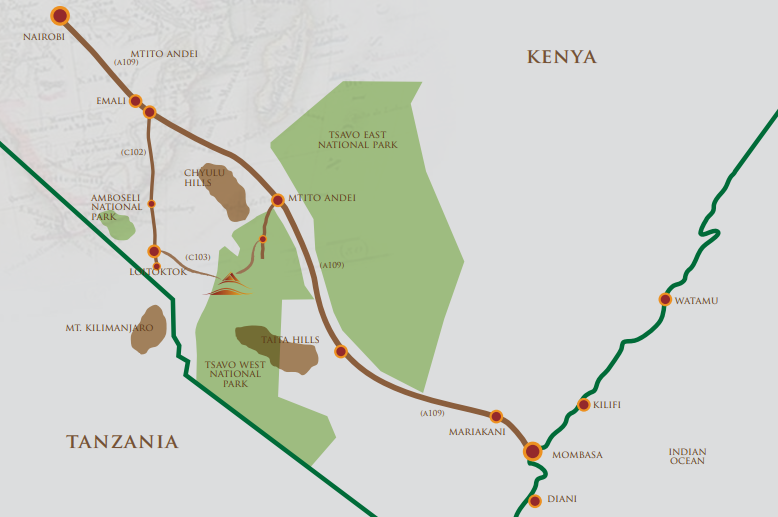
📍 Getting/Access to Tsavo NPs
The Tsavo Conservation Area lies between Nairobi and Mombasa, making it easily accessible by road or rail.
🚪 Entry Gates by Park
| Park | Main Entry Gates | What They’re Best For |
|---|---|---|
| Tsavo East National Park | Voi Gate, Buchuma Gate, Sala Gate, Manyani Gate | Access from Mombasa and Nairobi routes, Voi SGR station connections, central and northern Tsavo East sectors |
| Tsavo West National Park | Mtito Andei Gate, Chyulu Gate, Maktau Gate, Ziwani Gate | Access from Nairobi and Mombasa highways, western Tsavo sectors, lodges near Mzima Springs and Chyulu Hills |
🚗✈️🚆 Getting to Tsavo National Parks
| Transport Mode | Details | Typical Travel Time | Best For |
|---|---|---|---|
| By Road | Well-used highways from Nairobi or Mombasa; final park roads are mostly dirt tracks | ~5–6 hours from Nairobi; ~3–4 hours from Mombasa | Flexible travel, budget trips, self-drive, private safaris |
| By Air (Charter Flights) | Flights land at multiple airstrips inside both parks (e.g., Voi, Satao, Aruba in East; Finch Hattons, Kilaguni, Ziwani in West) | ~1–1.5 hours flight time from Nairobi or the Coast | Time-poor travelers, luxury and fly-in safaris |
| By Train (SGR) | Standard Gauge Railway stops at Voi (ideal for Tsavo East) and Mtito Andei (ideal for Tsavo West), then transfer by safari vehicle | ~4–5 hours by train + 1–2 hours transfer | Comfortable, good value, avoids long highway drives |
🧭 Practical Planning Notes
| Topic | Expert Insight |
|---|---|
| Most popular access for Tsavo East | Voi Gate via road or SGR to Voi station |
| Most popular access for Tsavo West | Mtito Andei Gate via road or SGR to Mtito Andei station |
| Choosing gates | Depends on lodge location—entering at the closest gate saves safari time |
| Charter flights | Usually arranged by lodges or safari operators as part of fly-in packages |
| Road conditions | Main highways are good; inside-park roads vary by season and rain |
Tour operator Kambu Campers offers guided safaris with experienced driver-guides who know both parks intimately and can help you explore hidden corners beyond the main circuits.
Getting Around & Key Areas (Map Highlights)
Tsavo East
- Aruba Dam: Reliable wildlife magnet
- Mudanda Rock: Natural catchment; superb elephant viewing
- Galana River & Lugard Falls: Riverine scenery, crocodiles, birds
- Yatta Plateau: World’s longest lava flow
Tsavo West
- Mzima Springs: Crystal clear pools, hippos, fish, underwater viewing
- Shetani Lava Flows: Stark volcanic landscapes
- Ngulia & Chyulu foothills: Elevated viewpoints and varied habitats
How Big Is Tsavo?
- Tsavo East: ~11,700 km²
- Tsavo West: ~9,000 km²
- Together: One of Africa’s largest protected areas
What this means for visitors
- You can’t “see it all” in one trip
- Distances are long—routing and lodge location matter
- Tsavo rewards time and patience, not rushing
Ecosystems & Habitats
Tsavo is a semi-arid savanna system with striking diversity:
- Open plains and acacia scrub (especially in Tsavo East)
- Riverine habitats along the Galana River and seasonal streams
- Volcanic landscapes, lava flows, rocky hills (especially in Tsavo West)
- Springs and wetlands such as Mzima Springs
Wildlife movements follow rainfall, water availability, and vegetation cycles—expect different patterns in dry vs green seasons.
🕰️ History of Tsavo National Parks
Tsavo East:
- Gazetted in 1948, one of Kenya’s oldest and largest parks
- Known for its Red Elephants—coated in iron-rich soil
- Site of the infamous Man-Eaters of Tsavo during the construction of the Uganda Railway
Tsavo West:
- Also established in 1948, carved out as a separate park for its distinct landscapes
- Site of key conservation efforts for black rhinos and Chyulu Hills ecosystem
- Home to the Mzima Springs, vital for water security in the region
🤔 Why Visit Both Tsavo Parks?
Though part of the same ecosystem, Tsavo East and Tsavo West offer very different safari experiences:
| Feature | Tsavo East | Tsavo West |
|---|---|---|
| Landscape | Open plains, red earth, Galana River | Hilly, volcanic, rocky, lava flows |
| Wildlife | Large herds of elephants, lions, buffalo | Rhinos, leopards, hippos, rare species |
| Terrain | Flat, wide-open views | Rugged, scenic, bushy terrain |
| Photography | Great for long-lens wildlife shots | Ideal for landscape photography |
| Accessibility | More accessible from Mombasa | Easier from Nairobi or Amboseli |
Visiting both parks gives you a complete Tsavo experience—big game, dramatic scenery, and diverse habitats all in one circuit.
🏞️ Top Attractions in Tsavo East NP
- Lugard Falls: Series of rapids and sculpted rocks along the Galana River
- Yatta Plateau: One of the world’s longest lava flows
- Aruba Dam: Watering point for elephants, giraffes, and predators
- Mudanda Rock: Natural viewpoint and popular for wildlife sightings
- Galana River Safaris: Rich birdlife and frequent big game crossings
🌋 Top Attractions in Tsavo West National Park(TWNP)
- Mzima Springs: Crystal-clear water pools with hippos and fish
- Ngulia Rhino Sanctuary: Protected area for endangered black rhinos
- Shetani Lava Flow: Vast volcanic plain with surreal landscapes
- Chaimu Crater: Ideal for hiking and panoramic views
- Poacher’s Lookout: Hilltop lookout with 360° scenery
🌦️ Tsavo N. Parks Weather and Climate
Tsavo experiences a semi-arid to savannah climate, with two main rainy seasons:
- Long rains: March–May
- Short rains: November–early December
- Dry seasons: June–October and January–February
Average daytime temperatures range from 24°C to 33°C, with warmer nights in lowlands and cooler conditions in elevated areas like Chyulu Hills.
📆 Best Time to Visit
| Season | Best For |
|---|---|
| June–October | Dry season, great for game viewing and clear roads |
| January–February | Less crowded, excellent birding, hot weather |
| March–May | Green season, beautiful scenery, fewer visitors (but rain may affect roads) |
| November | Short rains, dramatic skies and landscapes |
💳 Entry Fees (per person, per day)
| Visitor Type | Tsavo East | Tsavo West |
|---|---|---|
| Kenyan Citizen | KES 500 | KES 1000 |
| Resident | KES 1,000 | KES 1,350 |
| Non-Resident | USD 80 | USD 80 |
Additional fees apply for vehicles, camping, and special activities.
🌿 Conservation in Tsavo: Vast, Wild & Under Pressure
Conservation in Tsavo protects one of Africa’s largest remaining wilderness ecosystems, covering 22,812 km² (8,808 sq miles) across Tsavo East and Tsavo West. This vast landscape supports over 10,000 elephants and plays a critical role in black rhino conservation at Ngulia Sanctuary, making Tsavo a cornerstone of Kenya’s biodiversity.
But size does not guarantee safety.
Tsavo faces five escalating pressures: human–wildlife conflict, habitat fragmentation and corridor loss, poaching pressure, climate-driven water stress, and infrastructure impacts. While elephant numbers have recovered from historic lows and protection has improved through anti-poaching patrols and modern surveillance, long-term conservation now depends on securing wildlife corridors, protecting water sources, and reducing conflict with surrounding communities.
Conservation in Tsavo is driven by several leading organizations working at ecosystem scale. The Kenya Wildlife Service (KWS) leads protection, law enforcement, and rhino conservation in Tsavo West, while the David Sheldrick Wildlife Trust supports elephant and rhino protection through anti-poaching units, aerial surveillance, and community programs.
Tsavo Trust provides rapid-response wildlife security and conflict mitigation across the ecosystem, and partners such as Big Life Foundation help safeguard key corridors and reduce human–wildlife conflict. Together, these efforts combine science, security, and community engagement to keep one of Africa’s largest wilderness landscapes functioning.
At TsavoKenya.org, we champion conservation grounded in evidence, responsible tourism, and ecosystem-scale thinking—building awareness and partnerships that support protection on the ground. Tsavo is not just scenery; it is one of East Africa’s last great living wilderness systems, and its future depends on what we do now.
Supporting responsible tourism helps sustain these programs. TsavoKenya.org promotes awareness and partnerships that empower conservation on the ground.
Wildlife of Tsavo: What You’ll See (and how East vs West really differs)
Tsavo is one ecosystem split into two very different safari experiences. Tsavo East is the classic “big sky, big herds” park—open country where wildlife is often seen in wider panoramas around dams, rivers, and plains. Tsavo West is more rugged and varied—lava, hills, springs, and denser pockets where biodiversity feels more layered and scenic, and where conservation features like rhino protection zones shape what you might see.
Flagship species across both parks
- Elephants (including the iconic red-dusted Tsavo look, especially in the drier East).
- Lions, buffalo, giraffe, zebra, plus a strong supporting cast of plains game.
- Leopard and cheetah are present but are more “earned” sightings—Tsavo is vast and you’re not usually surrounded by many vehicles sharing sightings.
- Antelope diversity (eland, oryx, kudu, impala, gazelles)
- Others: Crocodiles and hippos along rivers and springs. You’ll also find hyena, jackal and wildebeest among others.
- 500+ bird species—excellent dry-country birding
What Tsavo East tends to deliver best
Think open savanna + waterpoint wildlife:
- Big-herd dynamics: elephants and other herbivores spread across wide plains, with viewing that often feels expansive rather than crowded.
- Reliable wildlife magnets: places like Aruba Dam (thousands of animals visit) and Mudanda Rock (a dry-season elephant draw and a classic vantage).
- River-and-dam birdlife: water attracts waterbirds and increases activity in the dry months.
What Tsavo West tends to deliver best
Think habitat variety + scenery + springs + rhino conservation:
- Dramatic habitat mix—from parched lava to greener pockets—which often translates into a richer “texture” of sightings and landscapes on a single game drive.
- Mzima Springs: a standout for aquatic life and a very different Tsavo mood—clear water, lush edges, and the feeling of a natural oasis emerging from lava terrain.
- Black rhino conservation focus: Tsavo West is central to Kenya’s rhino protection story, including the expanded rhino sanctuary announced by KWS (with a large founder population), which is a key biodiversity differentiator for the West.
Birding and biodiversity highlights (both parks)
- Tsavo is widely regarded as highly biodiverse, with habitats ranging from semi-arid savanna to springs and hill country—this is why birding is strong and why “same-day variety” can be surprisingly high, especially when you include Tsavo West’s springs and elevations.
Expectation-setting (the forum-and-review reality check)
Tsavo is about scale and realism, not high-density sightings like the Maasai Mara. You can have exceptional game drives—but the park rewards time, good routing, and patience, especially for predators.
The Red Elephants of Tsavo
Tsavo’s elephants often appear reddish after dust-bathing in iron-rich soils—an iconic sight. Large herds are especially common near Mudanda Rock, Aruba Dam, and along river systems during dry periods.
🏨 Where to Stayin Tsavo: Lodges and Camps
In Tsavo East:
- Ashnil Aruba Lodge – overviews Aruba Dam
- Satao Camp – rustic luxury with waterhole views
- Man Eaters Camp – historic location with river access
In Tsavo West:
- Kilaguni Serena Lodge – excellent wildlife viewing and Chyulu views
- Ngulia Safari Lodge – close to rhino sanctuary
- Severin Safari Camp – eco-luxury, set in open wilderness
🚙 Safaris and Tours in Tsavo
- Game drives: Morning and evening drives offer the best light and wildlife activity
- Walking safaris: Available with armed guides in select zones
- Birding tours: Over 600 species recorded across the two parks
- Cultural extensions: Visit Taita, Maasai, or Kamba communities
- Photography safaris: Best from June to October, when dust and light create dramatic images
TsavoKenya.org has partnered with dedicated conservationists, eco-tourism experts and tour operators to showcase the beauty and importance of the Tsavo ecosystem. As part of this mission, Kambu Campers is among our trusted Tsavo safaris partner offering affordable, private, and group tours with experienced safari guides deeply familiar with the Tsavo ecosystem. You can contact them directly for Tsavo camping and eco-friendly safaris.
Safari Styles & Activities
- Game drives (best early morning and late afternoon)
- Birding and photography (big skies, elephants, landscapes)
- Scenic stops (springs, lava flows, viewpoints)
- Some properties offer sundowners and guided nature walks in designated areas
Self-Drive or Guided Safari?
Self-drive
- Freedom and lower cost
- Requires solid planning, navigation, and a 4×4
- Tsavo is huge—mistakes cost time and fuel
Guided safari
- Better wildlife tracking
- More efficient use of time
- Less stress—ideal for first-time visitors
Tsavo Compared to Other Parks
- Vs Maasai Mara: Tsavo is bigger, quieter, less crowded; Mara is denser and more dramatic
- Vs Amboseli: Tsavo is far larger and more varied; Amboseli is compact with mountain views
- Vs Nakuru: Tsavo is wilderness-scale; Nakuru is smaller and more concentrated
Bottom line: Tsavo is about landscape, space, and atmosphere.
Why Tsavo National Parks?
Come to Tsavo if you want:
- Big skies and real wilderness
- Outstanding elephant experiences
- Fewer crowds and more space
- A classic, old-school safari feel
Don’t come expecting:
- Zoo-like density
- Short distances between everything
- Constant action every five minutes
Give Tsavo time and the right expectations—and it delivers one of Kenya’s most authentic, memorable safaris.
📅 Planning Your Tsavo Safari: Tips & Essentials
- Choose your route: Nairobi to Tsavo West, then connect to Tsavo East and exit to Mombasa—or reverse
- Start points: Nairobi, Mombasa/Diani, or Voi (SGR)
- Transport: Road, SGR + transfer, or fly-in
- Best for: Elephants, big landscapes, uncrowded safari, bush + beach circuits
- Mindset: Slow down, plan smart routes, stay at least two nights
- Travel in a 4×4 during rainy season for better access to remote areas
- Book park entry online or pay at the gate (check KWS website for updates)
- Combine Tsavo with Amboseli, Chyulu Hills, or Lumo Conservancy
- Pack smart: include binoculars, sunscreen, insect repellent, reusable water bottle, and neutral safari clothing
- Support local conservation by visiting rhino sanctuaries, community-owned lodges, or donating to anti-poaching initiatives
🌍 Final Thoughts
Tsavo is a land of extremes—red dust and green oases, elephants and lava flows, lions and springs. It’s raw, untamed, and deeply rewarding for those who take the time to explore its layers.
Whether you’re planning your first safari or returning for a deeper experience, Tsavo East and West together offer one of Kenya’s most complete and wildest adventures.
And as we explore, we must also protect. By choosing responsible travel partners, supporting local conservation, and spreading awareness, we can ensure the Tsavo Conservation Area thrives for future generations.
Join Us at TsavoKenya.org
At TsavoKenya.org, we’re driven by a shared love for Kenya’s wild heart — the Tsavo Conservation Area, home to Tsavo East and Tsavo West National Parks. This platform is both a tribute to Tsavo’s vast landscapes, legendary red elephants, and timeless wilderness, and a call to action to help protect them.
Join us as we work to preserve Tsavo’s fragile ecosystems, safeguard its wildlife corridors, and ensure that future generations can experience the raw beauty of Kenya’s largest protected area. Whether you’re planning your next safari, seeking expert travel insight, or looking to get involved in conservation, TsavoKenya.org is your trusted companion for all things Tsavo.
Visit. Explore. Protect.
Eco-Friendly Safari at Tsavo National Parks
Tsavo National Park, encompassing Tsavo East and Tsavo West, is one of Kenya’s most iconic…
Tsavo National Parks Location is Kenya
Tsavo National Park, located between Nairobi and Mombasa, is a vital conservation area in Kenya,…
Tsavo West Park’s Road Conditions
Tsavo West National Park, renowned for its rugged landscapes and diverse wildlife, offers visitors a…
Tsavo West NP Animals/Wildlife
Tsavo West National Park is a wildlife haven, offering an unparalleled safari experience with diverse…
Safari Game Drive in Tsavo West
Due to the park’s diverse terrain, which includes rugged volcanic hills, rocky landscapes, and dense…
Tsavo West Vs East
Tsavo West and Tsavo East National Parks together form the Tsavo Conservation Area, one of…
Tsavo West Accommodations
Tsavo West National Park, a sprawling wildlife haven spanning 9,065 square kilometers, is known for…
Tsavo East Accommodation
Tsavo East National Park(TENP), one of Kenya’s largest and most iconic wildlife reserves, offers a…
7 Attractions in Tsavo East NP.
Tsavo East National Park, covering 13,747 square kilometers, is one of Kenya’s oldest and largest…
6 Tsavo West Park Attractions
Tsavo West National Park, covering approximately 9,065 square kilometers, is one of Kenya’s most diverse…
Guide to Tsavo East N.P
Tsavo East National Park, one of Kenya’s oldest and largest protected areas, plays a crucial…
Tsavo West National Park Guide
Tsavo West National Park, one of the most iconic and diverse national parks in Kenya,…
Tsavo West National Park Gates
Tsavo West National Park’s 5 gates provide varied access to different sections of the park,…

Tsavo East National Park Gates
Tsavo East National Park, one of Kenya’s oldest and largest parks, is accessible through five…
Guided Safaris in Tsavo East National Park
Guided tours at Tsavo East National Park offer not only a chance to explore one…