
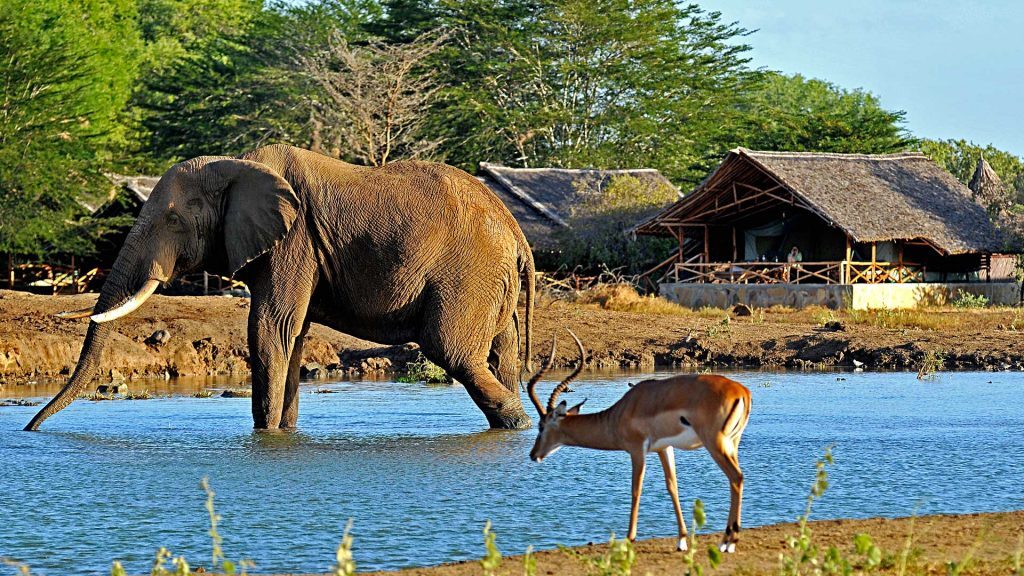
Satao Camp is not “luxury” because it has glossy hotel finishes. It is luxury because it delivers something rare in Tsavo East: a genuinely wild, unfenced tented camp anchored by a permanent waterhole, where the main event often happens 10–30 metres from the lounge—sometimes all day, sometimes deep into the night. The camp’s own positioning is explicit: Tsavo is elephant country, and Satao’s waterhole can draw very large numbers of elephants in peak dry periods.
This guide explains what Satao Camp is, where it is, how to get there, what the tents are like, what you do on safari, what wildlife you can expect, how pricing works, how to book, and how it compares to other Tsavo East camps—so you can decide if it’s the right base for your safari.
Satao Camp at a glance
- What it is: Luxury tented camp inside Tsavo East National Park, Kenya, built around a permanent waterhole.
- Signature: Unfenced camp + front-row waterhole viewing (elephants are the headline).
- Luxury style: “Safari luxury” (experience-first) rather than resort luxury—space, privacy, atmosphere, guiding, and location are the value.
Key Foundational Facts About Satao Camp
- Owner: Southern Cross Safaris (Mombasa)
- Opened: 1995
- Location: Inside Tsavo East National Park, Kenya
- Accommodation type: Luxury tented safari camp
- Number of tents: Approximately 20 (including suites)
- Signature feature: A permanent waterhole directly in front of camp that attracts large numbers of elephants and other wildlife
- Camp style: Unfenced, experience-led, classic safari camp
- Positioning: Experience-first luxury, focused on wilderness, wildlife behavior, and atmosphere rather than resort amenities
- Official Website: https://sataocamp.com/
Satao Camp: Brand, Identity, and What Makes It Special
You will see Satao referred to as Satao Camp, Satao Safari Camp, or Satao Tented Camp—all describing the same property: a luxury tented camp inside Tsavo East National Park, Kenya.
What sets Satao apart is not flashy resort infrastructure, but experience-first safari luxury:
Why Satao stands out in Tsavo East
1) The waterhole is the camp’s “private theatre”
Many camps say they have wildlife nearby. Satao is designed so wildlife activity is the center of the property—the waterhole sits right in front of the camp’s main areas, and guests commonly describe it as the dominant feature of the stay.
Practical implication: Even when you’re not on a game drive—midday heat, between drives, after dinner—you can still be “on safari.”
2) Unfenced, properly wild, and intentionally remote-feeling
Satao is repeatedly described as unfenced, which matters: it changes the emotional texture of the experience. You hear animals. You feel the night. You watch elephant dynamics from the deck.
Luxury takeaway: The luxury is the access to wildness—without sacrificing a comfortable bed, a proper bathroom, and professional hosting.
3) It’s a Tsavo camp, not a “Tsavo hotel”
Tsavo East rewards travelers who want space, dust-light, and big landscapes—and Satao fits that identity. It does not try to be a city hotel in the bush. It tries to be Tsavo, at its most cinematic.
In Summary:
- A waterhole at camp that regularly draws elephants and other wildlife
- Unfenced design, so animals can and do move through the area
- Classic canvas safari tents rather than permanent hotel-style rooms
- A setting that feels remote, wild, and cinematic, even by Tsavo standards
In short, Satao is built for travelers who want Tsavo East to feel like a true wilderness destination, not just a stopover between bigger-name parks.
Where Is Satao Camp Located?
Is Satao Camp inside Tsavo East?
Yes. Satao is sold as an in-park camp in Tsavo East National Park.
Why “inside the park” matters in Tsavo East
Tsavo East is enormous. The difference between inside-park and outside-gate accommodation is not subtle:
- Earlier starts without gate admin
- More flexible game drive loops
- Less dead time on short stays
- Better chance of being positioned for first light (best predators + best photography)
Satao Camp Map, Directions, and Access Roads
How to Get to Satao Camp
Most guests reach Satao Camp via:
- Road transfer from Voi (the main rail and road hub for Tsavo East)
- Road transfer from Mombasa, Diani, or Nairobi as part of a safari circuit
- In some itineraries, a fly-in safari combined with road transfers inside the park
From Voi to Satao Camp
Voi is the most common access point for Tsavo East, especially for travelers using the SGR train from Nairobi or Mombasa. From Voi, the drive into the park and onward to Satao typically takes several hours, depending on road conditions and the exact route used.
Access Roads and Vehicles
- Roads inside Tsavo East are unpaved and can be rough, especially after rains.
- A 4×4 safari vehicle is strongly recommended.
- During the wet season, some routes may be slower or require detours.
The remoteness of Satao’s location is part of its appeal—but it also means you should treat travel time as part of the safari experience, not just a transfer.
Summary of Access options include:
- By road: Most guests arrive via Voi or Tsavo East gates from Mombasa, Diani, or Nairobi. The final approach is on park tracks and requires a safari-ready 4×4 vehicle.
- By train (SGR): Guests can travel by SGR to Voi and transfer by road into the park.
- By air: Charter flights can land at nearby airstrips, with road transfers arranged to camp.
Practical note: Road conditions vary seasonally. Travel time should be considered part of the safari experience rather than a simple transfer.
Accommodation at Satao Camp: Tents, Rooms, and Suites
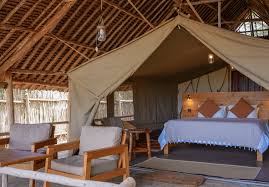
Satao Camp is a tented camp, not a lodge. There are no concrete hotel rooms here—accommodation is in spacious safari tents designed to balance comfort with an authentic bush feel.
Tent Categories at Satao Camp
Satao Camp offers 20 spacious safari tents, all en-suite and designed in a classic East African safari style:
- 15 Standard Tents – Spacious, comfortable, and positioned among tamarind trees for privacy and shade.
- 5 Suites – Larger tents positioned closest to the waterhole, offering the best views and most frequent wildlife sightings from your veranda.
All tents feature:
- En-suite bathrooms
- Private verandas
- Comfortable safari beds
- Thoughtful African-inspired décor
- Space for extra beds where needed
- Adapted tents for guests with disabilities
Expert booking tip:
If wildlife viewing from camp is important to you, request a suite or a waterhole-facing tent. These offer a dramatically different experience, especially during the dry season when elephants gather daily.
What the Tents Are Like
- Large canvas tents with proper beds and en-suite bathrooms
- Solid floors, comfortable furnishings, and private verandas
- Design focused on airflow, shade, and views into the surrounding bush
- Some tents are positioned to overlook the waterhole, offering wildlife viewing from camp
Suites and Upgrades
Depending on season and configuration, Satao may offer larger or premium tent options. These focus on:
- More space
- Better positioning
- Enhanced privacy
Family Tents
Satao can accommodate families, but it is best suited to older children who are comfortable in a true wilderness environment. This is an unfenced camp, so supervision and safari awareness matter.
Amenities at Satao Camp
Satao’s amenities are safari-appropriate rather than resort-style:
- Dining and lounge areas with views toward the waterhole
- Comfortable common spaces for relaxing between drives
- Campfire evenings and classic safari ambience
- No city-style distractions—the focus is on nature, wildlife, and atmosphere
This is intentional: Satao’s luxury is about where you are and what you see, not about marble floors or spa menus.
The Satao Camp Safari Experience
The Satao Waterhole: A Front-Row Seat to Tsavo’s Giants
At the heart of Satao Camp lies a permanent waterhole that acts as a magnet for wildlife, especially during the dry season. This is not just scenery—it is the living stage of your safari.
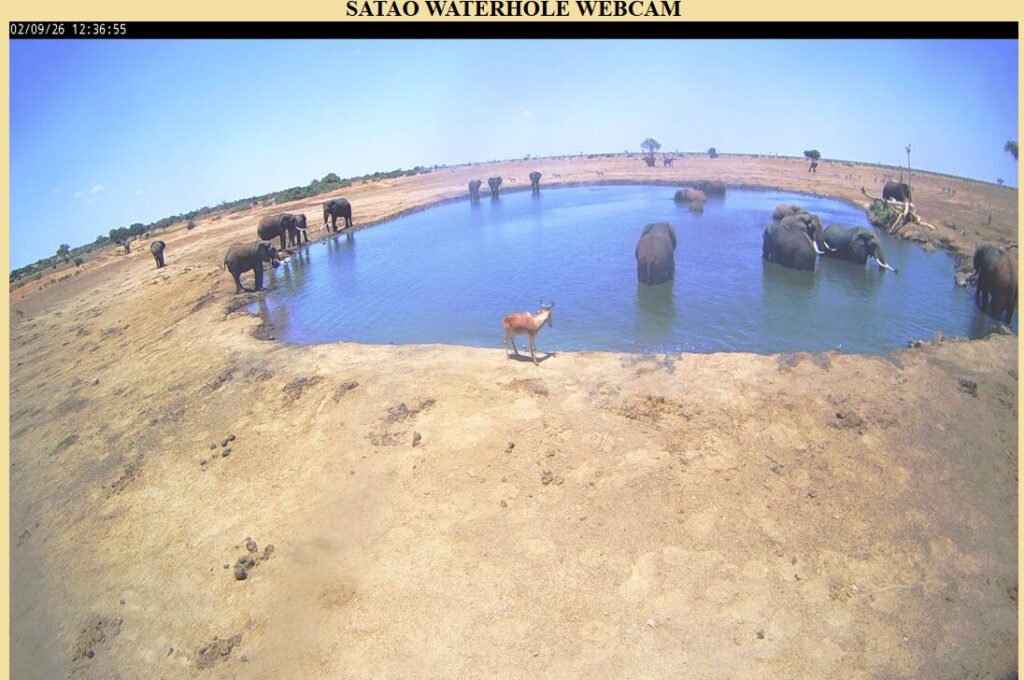
On many days, guests watch:
- Large herds of elephants arrive to drink and bathe
- Giraffe, zebra, buffalo, and antelope come in throughout the day
- Birds gather to drink and preen
- Occasional predators pass through the area
Because the camp is unfenced, wildlife movement around the waterhole is natural and unscripted. Even between game drives, you remain immersed in the safari—often watching wildlife from the lounge, dining area, or your own veranda.
Satao’s conservation commitment:
The camp maintains this waterhole year-round to support wildlife movement and habitat stability, especially in dry periods.
📸 Photography & Filming at Satao Camp
Why this matters:
Satao is a photography goldmine, and photographers actively search for camps like this.
Game Drives from Satao Camp
Game drives are typically conducted:
- Early morning
- Late afternoon
This matches the best wildlife activity periods and the best light for photography. Because Satao is inside the park, you avoid wasting prime hours at entry gates.
Walking Safaris Near Satao Camp
Walking activities in Tsavo East depend on park regulations and safety conditions. When available and appropriate, they are conducted with trained guides and focus on:
- Tracks and signs
- Smaller wildlife and plant life
- Understanding the ecosystem rather than big game viewing
Always check in advance what is currently permitted.
📸 Photography & Filming at Satao Camp
Satao Camp is one of Tsavo East’s strongest bases for wildlife photography thanks to:
- The predictable wildlife activity at the waterhole
- Early morning and late afternoon access without gate delays
- Tsavo’s signature dust, light, and big-sky landscapes
- Frequent elephant behavior scenes: bathing, social interaction, dusting
The hour before sunset—often called “magic light”—is especially productive, with warm tones, long shadows, and dramatic silhouettes across the plains.
Tips for photographers:
- Bring a telephoto lens for waterhole action and a wider lens for landscapes
- Plan at least 2–3 nights to allow for varied light and behavior
- Use midday hours to rest and photograph the waterhole from camp
More Pro tactics:
- Morning: expose for highlights and aim for dust-glow silhouettes
- Late afternoon: set up for waterhole approach trails (anticipate movement)
- Night: ask about safe, camp-approved ways to photograph waterhole scenes (never improvise in unfenced camps)
Birding Around Satao Camp
The mix of open plains, bush, and seasonal water makes the Satao area excellent for birding, especially:
- Around the waterhole
- In riverine and wooded patches nearby
- During and after rains when migratory species are present
Sundowners at Satao Camp
Evenings often include sunset stops in scenic locations, followed by a return to camp for dinner and relaxation. Tsavo’s wide skies and red earth make for particularly strong sunset colors.
Reviews of Satao Camp – Pros and Cons:
Pros of Satao Camp
1) Waterhole-first safari experience
- Guests consistently highlight the watering hole directly at camp as a defining feature—wildlife activity can be so constant that it feels like you are on safari even when you are “back at camp.”
- Multiple reviews describe the experience of watching animals from the veranda / camp areas as a major reason they’d return.
2) Immersive, classic tented-camp atmosphere
- Reviews repeatedly characterize Satao as a traditional, old-school tented camp with a strong safari mood (unfussy, authentic, bush-focused).
- The “wild around you” feel is often described as a core part of the camp’s appeal (impala, baboons, and occasionally larger wildlife near tents).
3) Staff and hospitality are a standout strength
- Service quality is one of the most consistently praised elements: guests describe staff as excellent, warm, professional, and attentive.
4) Strong food experience for a remote bush camp
- Food quality is frequently called out as very good, with particular praise for variety and execution (including special meals like BBQ nights).
- Reviews also mention staff accommodating dietary needs when informed in advance.
5) Spacious tents and memorable bathrooms
- Guests commonly mention large, comfortable tents and impressive bathrooms, including “open” shower-style features in some tents.
- Several reviews highlight a sense of comfort and security in the tents despite the wild setting.
6) Excellent for birding and “camp-based” viewing
- Birding is repeatedly mentioned as a high point, especially around the bar/viewing areas and camp grounds.
7) Family-friendly in the “safari family” sense
- Specialist reviewers note it can work well for families who are excited by wildlife and comfortable with bush rules (no free roaming / ball games because wildlife is present).
Cons of Satao Camp
1) Heat management can be a real issue in hot months
- At least some guests report conditions being very hot, with fans not always feeling sufficient—this can materially affect comfort for heat-sensitive travelers.
2) Bed comfort is inconsistent by guest preference
- A recurring negative detail is that some guests found the beds very firm/hard.
3) Drinks pricing can feel high
- Reviews mention drinks being expensive, even when overall experience is rated highly.
4) Limited “resort” features (notably: no pool)
- For travelers expecting lodge-style downtime infrastructure, note that at least one specialist review explicitly flags no pool. This isn’t a flaw if you’re buying the bush-camp concept, but it is a common expectation gap.
5) You cannot move around freely like a fenced resort
- Because wildlife is frequently on/near the grounds, the camp environment requires situational awareness and rule-following. Families with very young children or guests wanting free movement may find this constraining.
6) “Traditional camp” trade-offs (less polished than ultra-luxury lodges)
- Even positive reviews sometimes frame Satao as having “all the basics” and a more traditional feel—meaning it may not match ultra-luxury expectations around climate control, ultra-fine dining, or high-end finishes.
7) Insect and mosquito management is something to plan for
- At least one review mentions preferring mosquito nets (though noting other protective measures were in place). In Tsavo, this is a normal safari reality but still a planning point.
Who Satao is best for (based on review patterns)
- Photographers and wildlife-first guests who want waterhole action at camp
- Couples and safari purists who value atmosphere over resort amenities
- Families with wildlife-aware kids who can follow bush-safety rules
Who should think twice
- Anyone highly sensitive to heat at night or who requires strong air-conditioning
- Travelers who prioritize pool time / resort facilities
- Guests who want free movement around the property without wildlife constraints
👨👩👧 Who Satao Camp Is Best For (And Who It Isn’t)
Is Satao Camp Right for You?
Satao Camp is ideal for:
- Couples and honeymooners seeking atmosphere and romance
- Photographers and wildlife enthusiasts
- Safari travelers who value immersion over resort facilities
- Guests staying 2 nights or more who want a true Tsavo experience
Satao Camp may not be ideal if you:
- Want constant Wi-Fi and urban-style amenities
- Prefer fenced resorts or city-hotel comfort
- Are only stopping in Tsavo for a very short, rushed overnight stay
- Are traveling with very young children who need unrestricted movement areas
Wildlife at Satao Camp and the Waterhole
Elephants at Satao Camp
Satao is especially well known for elephant activity at its waterhole. In dry periods, elephants often come to drink and dust-bathe, sometimes staying for extended periods within view of camp.
Waterhole Wildlife
Depending on season and conditions, you may see:
- Elephants and buffalo
- Plains game such as zebra and antelope
- Birds coming to drink
- Occasional predators passing through
Big Game and Predators
The wider Satao area supports:
- Lions, leopards, and other predators
- Large herbivores typical of Tsavo East
- A classic Tsavo mix of red elephants, big skies, and open country
The Landscape Around Satao Camp
Expect a blend of:
- Open plains
- Scrub and bushland
- Seasonal watercourses and dusty tracks
This variety is part of what makes Tsavo East such a strong landscape photography destination.
Satao Camp Pricing, Rates, and Seasons
Rates and Prices
Satao Camp is positioned in the luxury safari segment of Tsavo East. Pricing reflects:
- In-park location
- Low-density, tented experience
- Full-board safari-style operation
Rates typically vary by:
- High season (peak wildlife and travel periods)
- Low or green season (better value, fewer guests, lusher landscapes)
Because Satao Camp is sold under different rate “bases” (camp-only Full Board vs Fully Inclusive Plus vs Ground Package via tour operators), you’ll see different inclusions depending on who issues the rate sheet. Below are the most recent published 2026 rates I could verify online, plus clear inclusions/exclusions for each format.
1) International-style rate: Fully Inclusive Plus (USD, 2026)
Published 2026 “from” rates (per person sharing, per night):
- 06 Jan–31 Jan 2026: from $413
- 01 Feb–28 Feb 2026: from $435
- 01 Mar–31 Mar 2026: from $413
- 01 Apr–30 Jun 2026: from $336
- 01 Jul–31 Oct 2026: from $435
- 01 Nov–15 Dec 2026: from $413
Inclusions (Fully Inclusive Plus)
These sources define Fully Inclusive Plus as including:
- Accommodation
- All meals
- Select drinks
- Activities
Exclusions (Fully Inclusive Plus)
Not itemized on those pages (they note rates are guidelines and may change).
Best practice: confirm, in writing, whether “activities” includes game drives and whether park fees are included or excluded (operators vary by package).
2) Kenya resident rate sheet style: Full Board vs Ground Package (KES, 2026)
A separate, more detailed 2026 rate table (KES) breaks Satao into Full Board accommodation only vs a Ground Package (which bundles drives/transfers).
A) Full Board accommodation (KES) — 2026 (per person per night)
Standard tent (Full Board) — per person sharing:
- 06 Jan–31 Jan 2026: KES 12,200
- 01 Feb–28 Feb 2026: KES 13,700
- 01 Mar–14 Apr 2026: KES 12,200
- 15 Apr–15 Jun 2026: KES 8,800
- 16 Jun–31 Oct 2026: KES 13,700
- 01 Nov–15 Dec 2026: KES 12,200
Inclusions (Full Board)
- Full board accommodation only
- Bottled water in rooms only
Exclusions (Full Board)
- KWS Tsavo East park fees
- All drinks & laundry
- Game drives
- Transfers from Satao airstrip
- Bush sundowner
B) Ground Package (KES) — 2026 (per person per night)
This package is explicitly listed as including:
Inclusions (Ground Package)
- Full board accommodation
- Local airstrip transfers
- 2 extended game drives per day
- Bottled water in the rooms
- One bush sundowner (noted as available when sharing 2 nights or more)
Exclusions (Ground Package)
- Tsavo KWS park fees
- All drinks & laundry
- Champagne & luxury spirits & wines
- Plus a listed conservancy fee line in that source
Offers and Packages
Some operators offer:
- Seasonal promotions
- Combined Tsavo East safari packages
- Circuit deals linking Tsavo East with other parks
If you are flexible on dates, the low season can offer excellent value for the same core experience.
Rates, Inclusions & Exclusions at Satao Camp
Satao Camp is sold under different rate formats depending on how you book.
Full Board Rates typically include:
- Accommodation in a safari tent
- All meals
- Water in rooms
Full Board Rates typically exclude:
- Tsavo East National Park entry fees
- Game drives
- Transfers
- Drinks and laundry
- Sundowners and special activities
Ground Package Rates typically include:
- Full board accommodation
- Scheduled game drives (usually 2 per day)
- Local airstrip transfers
- Water in rooms
- One bush sundowner (often with a minimum stay requirement)
Ground Package Rates typically exclude:
- Park entry fees
- Drinks and laundry
- Premium wines, spirits, and champagne
Important: Always confirm exactly what is included in your quoted rate, as inclusions can vary by season and booking channel.
How to Book Satao Camp
Reservations and Availability
Because Satao is not a large property, availability can be limited—especially in peak months. Booking in advance is strongly recommended.
How to Book
You can book Satao Camp:
- Through safari operators and tour companies. We’ve worked with Kambu Campers before to support us in securing us accommodation booking.
- As part of a packaged Tsavo East or Kenya safari
- Via specialist safari travel planners
Payment Options and Cancellation Policy
Payment methods and cancellation terms depend on who you book through (camp direct vs. operator). Always confirm:
- Deposit requirements
- Final payment deadlines
- Cancellation and amendment rules
Satao Camp Reviews, Ratings, and Trip Reports
Guest feedback commonly highlights:
- The waterhole and wildlife at camp
- The atmosphere and sense of wilderness
- The classic safari tented-camp feel
- The value of being inside the park for game drives
Trip reports often emphasize that Satao feels very different from lodge-based stays, especially for travelers who want Tsavo East to feel remote and wild.
Satao Camp: Ownership, History, and the Satao Safari Portfolio
Who Owns Satao Camp?
Satao Camp in Tsavo East National Park is owned by Southern Cross Safaris (Mombasa), one of Kenya’s long-established safari operators. Southern Cross Safaris has been active in Kenya’s tourism industry for decades and is widely recognized for operating and developing safari properties and experiences across key ecosystems.
In the case of Satao Camp, Southern Cross Safaris is both the owner and operator, responsible for the camp’s positioning, standards, guest experience, and long-term management within Tsavo East National Park.
This ownership structure is important for guests because it means Satao Camp is not a franchise or a loosely affiliated property—it is part of a vertically integrated safari operation with deep logistical experience in Kenya’s parks, guides, vehicles, and ground handling.
When Was Satao Camp Founded?
Satao Camp opened in 1995 in Tsavo East National Park.
This places Satao among the longer-established luxury tented camps in Tsavo, with nearly three decades of operational history in one of Kenya’s most demanding wilderness environments. Its longevity is a strong indicator of:
- устойчивость (long-term viability) in a challenging safari ecosystem
- consistent demand for its experience-led model
- deep familiarity with Tsavo East’s wildlife patterns, seasons, and logistics
Over the years, the camp has evolved in comfort and design, but it has retained its original concept: a classic, unfenced tented safari camp centered on a permanent waterhole.
Where Satao Camp Fits in the Satao / Southern Cross Portfolio
1) Satao Camp (Tsavo East National Park)
This is the flagship Satao property in Tsavo East and the one most closely associated with the “Satao” name.
Key characteristics:
- Located inside Tsavo East National Park
- Classic luxury tented camp format
- Built around a permanent waterhole that attracts large concentrations of wildlife, especially elephants
- Operated and owned by Southern Cross Safaris
- Approximately 20 tents, including standard tents and larger suites positioned closest to the waterhole
Satao Camp is best understood as a traditional safari camp in the old East African style, where the primary luxury is access to wilderness, space, wildlife, and atmosphere rather than resort-style infrastructure.
2) Satao Elerai (Amboseli Ecosystem)
Satao Elerai is part of the broader “Satao” brand family but operates under a different ownership model.
- The land and lodge are community-owned by the local Maasai community in the Amboseli ecosystem.
- Southern Cross Safaris acts as the operating and investment partner, managing the lodge and its tourism operations.
- This makes Satao Elerai a community-based conservation and tourism partnership, rather than a fully privately owned lodge like Satao Camp in Tsavo East.
From a guest perspective, Satao Elerai is positioned as:
- A luxury lodge in the Amboseli ecosystem
- Focused on Kilimanjaro views, open plains, and elephant corridors
- Part of a conservation and community benefit model, rather than a purely private concession lodge
Why This History and Ownership Matters to Guests
Satao Camp’s long history and stable ownership explain several things that guests consistently notice:
- Deep knowledge of Tsavo East: Guides and operations are shaped by decades of working in this ecosystem.
- Strong wildlife positioning: The camp’s placement around a reliable water source reflects long-term ecological understanding, not short-term development.
- Consistency of experience: Satao is not a trend-driven lodge—it is a mature safari product refined over many years.
- Clear brand identity: Unlike some properties that change management or concept frequently, Satao has maintained a coherent, classic safari identity since its early years.
Satao Camp vs Galdessa vs Aruba Lodge
Satao Camp vs Galdessa
- Satao: Classic luxury tented camp, waterhole focus, traditional safari atmosphere
- Galdessa: More exclusive, riverine setting, often private or low-density, different style of luxury
Choose Satao if you want iconic tented-camp safari energy and wildlife at camp. Choose Galdessa if you want privacy and a more boutique, river-based experience.
Big picture:
- Satao Camp = classic tented safari luxury built around a busy waterhole (especially elephants).
- Galdessa Camp = low-density, riverfront eco-luxury on the Galana River with a quieter, more private feel.
🌍 Setting & Atmosphere
Satao Camp
- Unfenced camp centered on a permanent waterhole.
- Wildlife activity (especially elephants) happens at camp, not just on drives.
- Feels like a traditional, lively safari camp with a social heart.
Galdessa Camp
- Set on the Galana River in a shaded riverine environment.
- Focus is on scenery, birds, hippos, and calm immersion.
- Very quiet, intimate, and low-density; more like a private safari house.
🏕️ Accommodation Style
Satao Camp
- About 20 tents (standard + suites).
- Classic full-board hosted safari camp.
- More guests, more communal energy.
Galdessa Camp
- Much smaller scale; often exclusive-use or near-private.
- Staffed with a chef; more bespoke, private-camp experience.
- Fewer rooms, more privacy, less “hotel” feel.
🐘 Safari Experience
Satao Camp
- Safari continues even when you’re in camp thanks to the waterhole.
- Great for photographers and guests who want constant wildlife action.
- More structured: morning drive, afternoon drive, camp time in between.
Galdessa Camp
- Emphasis on river watching, birdlife, and relaxed pacing.
- Game drives are part of the experience but not the only focus.
- Better for guests who prefer slow, scenic, immersive stays.
🍽️ Food & Service
Satao Camp
- Traditional lodge-style full-board dining and hosted service.
- Reliable, social, and easy for first-time safari guests.
Galdessa Camp
- More like a private chef experience for your group.
- Less like a hotel, more like staying in a staffed safari house.
✅ Pros & Cons (Short Version)
Satao Camp – Pros
- Best-in-class waterhole wildlife viewing.
- Strong classic safari atmosphere.
- Easy, all-in-one safari base.
Satao Camp – Cons
- Not a resort; comfort is bush-camp style, not ultra-polished.
- Less scenic greenery than river-based camps.
Galdessa Camp – Pros
- Beautiful river setting, shade, breezes, and calm.
- Very private, low-density, exclusive feel.
- Strong eco and conservation character.
Galdessa Camp – Cons
- Private/exclusive-use model can be confusing or pricier.
- Less “constant action” than a busy waterhole camp.
🧭 Which Should You Choose?
Choose Satao Camp if you want:
- Elephants and wildlife right at camp
- A classic, social, hosted safari camp
- Strong photography opportunities around a waterhole
Choose Galdessa Camp if you want:
- River scenery, birds, and a quiet, immersive experience
- Privacy and a low-density, boutique feel
- A slow, nature-first safari rhythm
🏁 One-line verdict
- Satao is about wildlife drama at your doorstep.
- Galdessa is about peaceful river immersion and privacy.
Big picture:
- Satao Camp = classic tented safari camp built around a wildlife waterhole (elephants and plains game often at camp).
- Aruba Lodge = comfortable lodge-style base near Aruba Dam, focused on game drives rather than wildlife at the lodge.
🌍 Setting & Experience
Satao Camp
- Inside the park, unfenced, centered on a permanent waterhole.
- Safari continues even when you’re in camp; wildlife often visible from the veranda.
- Feels immersive, wild, and cinematic.
Aruba Lodge
- Inside the park, near Aruba Dam.
- Wildlife is mainly seen on drives, not from the lodge itself.
- More practical and predictable, less immersive.
🏕️ Accommodation Style
Satao Camp
- About 20 spacious tented suites and tents.
- Classic safari ambience, hosted camp rhythm.
- Experience-first, not resort-style.
Aruba Lodge
- Permanent lodge rooms, hotel-like layout.
- Pool and structured facilities.
- Comfort-first, family-friendly.
🐘 Safari Focus
Satao Camp
- Strong at-camp wildlife viewing (especially elephants at the waterhole).
- Excellent for photographers and safari purists.
- Less need to be in the vehicle all day.
Aruba Lodge
- Wildlife mainly on scheduled game drives.
- Good base for short, efficient safaris.
- Less wildlife interaction around the lodge.
✅ Pros & Cons (Short)
Satao Camp – Pros
- Wildlife at camp
- Classic safari atmosphere
- More immersive experience
Satao Camp – Cons
- Fewer resort amenities
- Bush-camp comfort, not hotel luxury
Aruba Lodge – Pros
- Comfortable lodge with pool
- Easy, practical safari base
- Family-friendly
Aruba Lodge – Cons
- Less wildlife at the lodge itself
- More “hotel in the park” feel
🧭 Which Should You Choose?
- Choose Satao Camp if you want wildlife at your doorstep and a classic tented safari experience.
- Choose Aruba Lodge if you want comfort, facilities, and a straightforward base for game drives.
🏁 One-line verdict
- Satao = immersion and waterhole drama.
- Aruba = comfort and practical safari base.
Satao Camp vs Aruba Lodge
- Satao: Luxury tented camp, immersive wilderness feel
- Aruba Lodge: Mid-range lodge near a dam, more functional and less atmospheric
Choose Satao for experience-first luxury. Choose Aruba for value and practicality.
Is Satao the Best Camp in Tsavo East?
For travelers seeking true safari-camp luxury inside Tsavo East, Satao is often considered the benchmark. “Best,” however, always depends on whether you value atmosphere and immersion or price and convenience more.
Honeymoon, Romance, and Special Occasions at Satao Camp
Satao is particularly strong for:
- Honeymoons
- Anniversaries
- Romantic, photography-focused trips
Why couples love it:
- Unfenced wilderness setting
- Waterhole wildlife viewing from camp
- Quiet, atmospheric evenings
- Classic safari romance rather than resort-style luxury
It also works well for special celebrations where the experience matters more than nightlife or spa menus.
Planning Your Stay at Satao Camp
Best Time to Visit
- Dry season: Better road conditions and concentrated wildlife around water
- Green season: Lusher landscapes, fewer guests, excellent birding, often better value
Satao Camp Weather by Month
Tsavo East is generally hot and dry, with seasonal rains. Expect:
- Hot days year-round
- Cooler mornings and evenings
- Dust in dry months, greener scenery after rains
How Long Should You Stay?
- Minimum: 2 nights (to justify the remote location)
- Ideal: 2–3 nights to explore the area properly and enjoy the camp itself
What to Pack
- Neutral-colored safari clothing
- Hat, sunscreen, and dust protection
- Camera gear and binoculars
- Light layers for mornings and evenings
Travel Tips for First-Time Visitors
- Embrace the wilderness nature of the camp
- Don’t expect city-hotel features—this is safari luxury
- Plan your stay so travel days don’t eat into your best game-viewing hours
8) 🧭 Suggested Length of Stay & Itinerary Logic
Why this matters:
This helps guests plan and increases average stay length.
Suggested section:
How Long Should You Stay at Satao Camp?
- Minimum recommended stay: 2 nights
- Ideal stay: 3 nights
This allows time for:
- Multiple game drive routes
- Different light conditions for photography
- Relaxed time at the waterhole and in camp
- A more immersive Tsavo experience rather than a rushed stopover
9) 🌱 Sustainability & Conservation Commitment (High-Trust Signal)
Why this matters:
Luxury safari travelers increasingly care about impact and ethics.
Suggested section:
Conservation & Sustainability at Satao Camp
Satao Camp is committed to:
- Supporting wildlife through year-round water provision
- Operating in an eco-conscious, low-impact manner
- Supporting Tsavo East National Park and wider conservation initiatives
- Aligning with the mission of the Global Alliance of National Parks
Your stay contributes directly to sustaining this fragile and extraordinary ecosystem
Final Verdict: Who Is Satao Camp For?
Satao Camp is ideal for:
- Travelers who want true tented-camp luxury inside Tsavo East
- Couples and honeymooners seeking atmosphere and romance
- Photographers and nature lovers who value location and light
- Safari purists who prefer experience over resort facilities
If you want Tsavo East to feel wild, cinematic, and immersive, Satao Camp remains one of the strongest choices in the park.