
For readers of TsavoKenya.org, one of the most popular and logical parks to combine with a visit to Tsavo East or Tsavo West is Nairobi National Park. As Kenya’s most accessible Big Game destination and the only national park bordering a capital city, Nairobi National Park offers a high-impact safari experience that complements the vast wilderness of the Tsavo ecosystem.
Whether used as a gateway safari at the start of a trip, a short wildlife stop at the end, or a standalone conservation-focused visit, Nairobi National Park adds depth, contrast, and convenience to any Tsavo-based itinerary.
Where Is Nairobi National Park?
Nairobi National Park is located immediately south of Nairobi’s city centre, just 10–15 minutes from the central business district and Nairobi’s main transport hubs. Despite its urban proximity, the park protects a large expanse of open savannah, riverine woodland, and seasonal wetlands supporting free-ranging wildlife.
The park is managed by Kenya Wildlife Service and holds full national park status, giving it Kenya’s highest level of legal wildlife protection.
Distance: Nairobi National Park to Tsavo East & Tsavo West
For travellers combining parks, distances are straightforward and practical:
- Nairobi → Tsavo East National Park
Approx. 330–350 km
Driving time: 5–6 hours (via Mombasa Road / A109) - Nairobi → Tsavo West National Park
Approx. 240–260 km
Driving time: 4–5 hours (via Mombasa Road, Mtito Andei area)
Because Nairobi is Kenya’s main transport hub, combining Nairobi NP with Tsavo East or West is logistically efficient—either by road, train (SGR to Tsavo gates), or domestic flights.
Why Nairobi National Park Is Globally Unique


Nairobi National Park stands apart because it is:
- the only national park bordering a capital city,
- home to large predators and endangered species,
- a real-world example of urban-edge conservation,
- and a critical conservation stronghold under active management.
Unlike zoos or wildlife enclosures, lions, rhinos, giraffes, and buffalo roam freely across open landscapes shaped by ecological processes, not cages—making Nairobi NP a fully functioning ecosystem.
Wildlife of Nairobi National Park
Mammals
Mammal diversity in Nairobi NP is exceptional for an urban-edge park, with over 100 recorded species. Regular sightings include lions, black rhinos, buffalo, giraffes, zebras, wildebeest, cheetahs, leopards, and several antelope species.
For Tsavo visitors, Nairobi NP offers denser, more predictable sightings in a compact area, contrasting with Tsavo’s vast, low-density wilderness.
Birds


With over 500 recorded species, Nairobi NP is one of Kenya’s most rewarding birding destinations. Highlights include the Secretary bird, Martial eagle, Lesser kestrel, Pallid harrier, Sooty falcon, White-bellied bustard, Grey crowned crane, and Corncrake, supported by wetlands and grasslands.
Reptiles
The park’s varied habitats support pythons, cobras, monitor lizards, agamas, skinks, and other ecologically important reptiles—often overlooked but vital to ecosystem health.
Rhino Conservation & Kifaru Ark
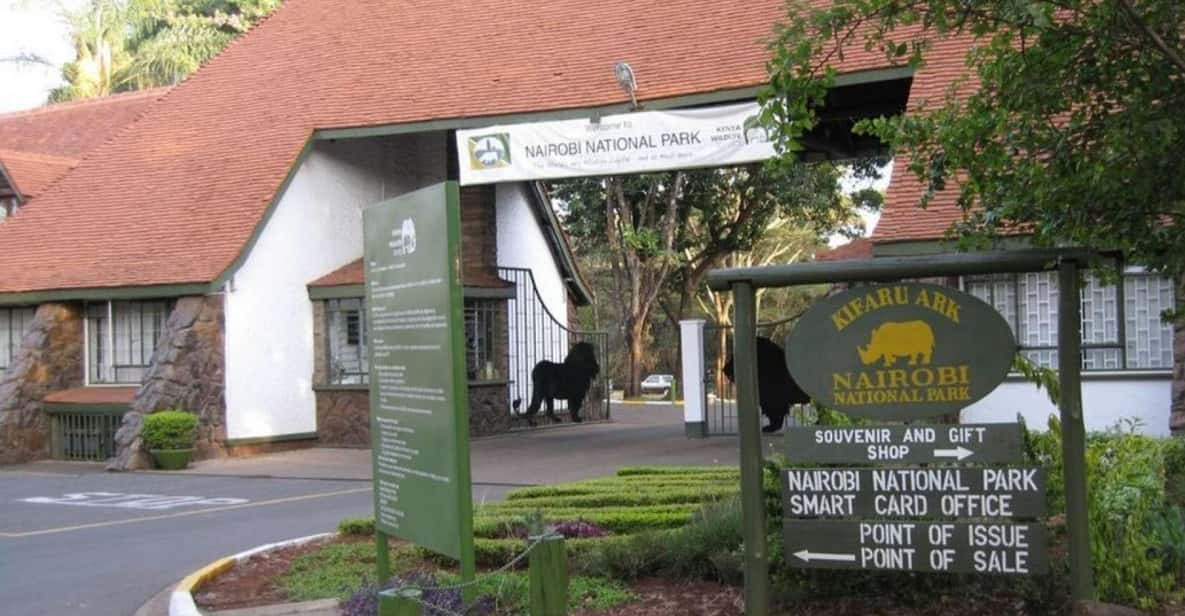


Nairobi National Park is one of Kenya’s most important rhino conservation strongholds, particularly for black rhinos. Kifaru Ark is a dedicated conservation zone supporting rhino protection, monitoring, and awareness, allowing visitors to observe rhinos in a secure, natural setting.
For travellers coming from Tsavo—where rhinos are more elusive—Nairobi NP often provides the most reliable rhino sightings of the entire safari.
Conservation, Fencing & Urban Pressure
Nairobi National Park sits at the frontline of modern conservation challenges. Strategic fencing is used to reduce human–wildlife conflict, protect surrounding communities, and enhance security for endangered species, while carefully balancing ecological connectivity.
Urban infrastructure, including roads and rail, creates edge effects such as noise and fragmentation. Active management, buffer zones, and mitigation measures are essential to keeping the park ecologically functional despite intense development pressure.
Nairobi Animal Orphanage (Not a Zoo)
Adjacent to the park is the Nairobi Animal Orphanage, a wildlife rescue and rehabilitation facility managed by Kenya Wildlife Service. Although animals are kept in enclosures, it is not a zoo; its purpose is rehabilitation, veterinary care, and conservation education. Nairobi National Park itself is likewise not a zoo, but a free-ranging landscape governed by natural behavior.
Safari Experiences in Nairobi National Park



Half-Day Safaris
- Ideal before or after Tsavo trips
- 4–5 hours inside the park
- Focus on lions, rhinos, giraffes, and open plains
Full-Day Safaris
- 8–10 hours of wildlife viewing
- Covers more habitats and territories
- Can be combined with nearby conservation attractions
All safaris are conducted in 4×4 vehicles with pop-up roofs, guided by professional driver-guides.
Tsavo East vs Tsavo West vs Nairobi National Park
| Feature | Nairobi National Park | Tsavo East NP | Tsavo West NP |
|---|---|---|---|
| Size | Small, compact | Vast, open | Rugged & volcanic |
| Wildlife density | Very high | Low–moderate | Moderate |
| Rhino sightings | Excellent | Rare | Occasional |
| Landscape | Savannah, wetlands | Open plains, rivers | Hills, lava, springs |
| Best for | Short safaris, layovers | Wilderness & elephants | Scenic diversity |
Together, the parks create a balanced safari circuit:
- Nairobi NP for density and conservation context
- Tsavo East for scale and elephant herds
- Tsavo West for scenery, springs, and rugged terrain
The Two Key Safari Tour Types in Nairobi National Park
—and how they compare with full-day safaris in Tsavo East & Tsavo West
For travellers planning Kenya safaris, Nairobi National Park offers two clearly defined tour formats: half-day and full-day game drives. These experiences are fundamentally different from full-day safaris in Tsavo, not in quality, but in scale, density, and purpose.
Understanding what each delivers helps set the right expectations.
1. 1/2-Day Nairobi National Park Safari (4–5 hours)
What this tour is designed for
- Short stays, city-based visitors, and layovers
- A high-impact wildlife experience in limited time
- First-time safari introductions
What you can realistically expect to see
Because Nairobi NP is compact with high wildlife density, half-day safaris are surprisingly productive. Typical sightings include:
- Lions (often resting or moving in early morning / late afternoon)
- Black rhinos (one of the most reliable parks in Kenya for rhino sightings)
- Giraffes, buffalo, zebras, wildebeest
- Common antelope species
- Rich birdlife, especially raptors and grassland birds
What to understand clearly
- You remain inside the park for a limited window
- Routes are focused on high-probability areas, not full park coverage
- The experience emphasizes quality sightings over distance covered
In short: a half-day Nairobi NP safari delivers excellent Big Game value per hour, something no large wilderness park can match in such a short time.
2. Full-Day Nairobi National Park Safari (8–10 hours)
What this tour is designed for
- Visitors who want deeper coverage of the park
- Wildlife enthusiasts, photographers, and repeat safari-goers
- Travellers combining Nairobi NP with nearby conservation attractions
What you can realistically expect to see
A full day allows:
- Exploration of multiple habitats (open plains, riverine areas, wetlands)
- Greater chances of seeing cheetahs and leopards
- Extended time with lion prides and rhino sightings
- Slower, more interpretive guiding
- Strong birding opportunities across habitats
What sets it apart from half-day tours
- Less time pressure
- Flexibility to wait out sightings
- More ecological interpretation by the guide
In short: a full-day Nairobi NP safari is about depth and understanding, not just ticking species.
How Nairobi NP Safaris Compare to Full-Day Tsavo Safaris
To set expectations correctly, it’s important to understand that Nairobi NP and Tsavo serve different safari purposes.
Full-Day Tsavo East & Tsavo West Safaris
- Tsavo East National Park and Tsavo West National Park are vast wilderness parks
- Full-day game drives typically cover long distances
- Wildlife is more dispersed, requiring patience and time
- Sightings often include:
- Large elephant herds
- Buffalo, giraffe, plains game
- Predators are present but less predictable
- Scenery and sense of scale are a major part of the experience
In Tsavo, a full day is often spent searching and exploring, rather than moving between guaranteed hotspots.
Nairobi NP vs Tsavo: What You’ll Notice Immediately
| Aspect | Nairobi National Park | Tsavo East & West |
|---|---|---|
| Park size | Compact | Vast |
| Wildlife density | High | Low–moderate |
| Time to first sightings | Often very quick | Can take longer |
| Rhino sightings | Very likely | Rare / occasional |
| Driving distances | Short | Long |
| Safari feel | Intense, focused | Expansive, exploratory |
The Key Takeaway for Travellers
- Half-day Nairobi NP safari:
Best for fast, high-quality wildlife encounters with excellent chances of seeing lions and rhinos. - Full-day Nairobi NP safari:
Best for deeper wildlife observation, interpretation, and photography in a compact ecosystem. - Full-day Tsavo safari:
Best for experiencing Kenya’s scale, wilderness, and dramatic landscapes, with wildlife encounters spread over large distances.
Rather than choosing one over the other, many experienced travellers combine Nairobi National Park with Tsavo East or Tsavo West. Nairobi NP delivers density and conservation insight; Tsavo delivers space and wilderness. Together, they create a balanced and realistic Kenyan safari experience.
Best Time to Visit Nairobi National Park
The park is open year-round:
- Dry seasons (Jan–Feb, Jun–Oct): best wildlife visibility
- Wet seasons (Mar–May, Oct–Nov): lush scenery and peak birdlife
Early mornings and late afternoons offer the most wildlife activity.
Park Fees & Entry
Entry fees vary by visitor category (citizens, residents, non-residents) and are charged per person, with separate vehicle entry fees. These fees directly support conservation, ranger operations, and park management.
Guide Training, Ethics & Responsible Tourism
Professional guiding is essential in Nairobi NP due to its compact size and high visitor pressure. Skilled driver-guides combine ecological knowledge, ethical decision-making, and interpretation to protect wildlife while enhancing visitor understanding. Responsible tourism—respecting park rules, maintaining distance, and minimizing disturbance—is critical to conservation success.
Why Combine Nairobi National Park with Tsavo?
For TsavoKenya.org readers, Nairobi National Park offers:
- A high-quality safari close to Nairobi
- Reliable sightings of rhinos and predators
- A strong conservation and education focus
- An ideal start or end point for Tsavo East & West safaris
It is not merely a stopover, but a globally significant conservation landscape that complements Tsavo’s scale with intensity and accessibility.
Nairobi National Park at a Glance
- Location: Nairobi, Kenya
- Management: Kenya Wildlife Service
- Ecosystems: Savannah, riverine woodland, wetlands
- Key species: Lions, black rhinos, giraffes, buffalo
- Best for: Half-day & full-day safaris, birding, conservation learning
Final Note
Nairobi National Park is best understood not as a novelty, but as a living conservation system under pressure, demonstrating how wildlife can persist alongside rapid urban growth. For visitors exploring Tsavo East and Tsavo West, Nairobi NP provides a powerful, accessible counterpoint—bringing conservation, wildlife density, and urban-edge ecology into sharp focus within a single safari journey.